When people picture a chicken, they often imagine a boring white bird, same shape, same color, same egg.
A small flock is anything but uniform.
Our hens are a blend of heritage breeds, classic backyard favorites, and natural crossbreeds that have developed right here on our pasture. Each breed brings something different to the land, to the flock dynamic, and to the eggs they lay.
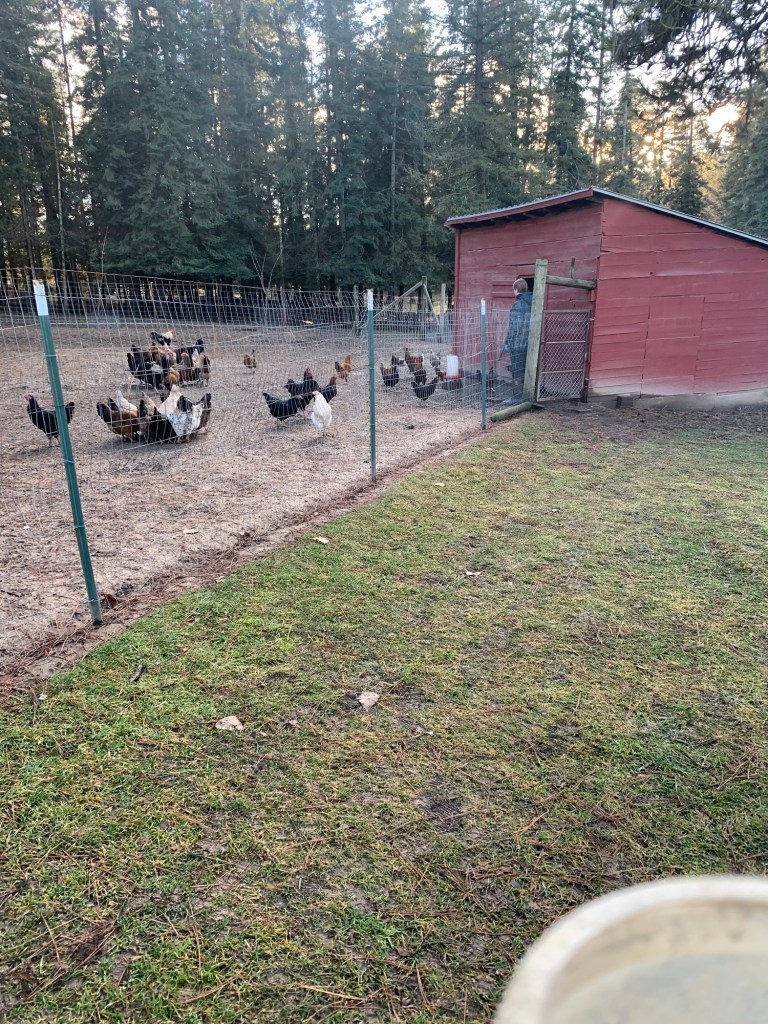
Here’s a closer look at the girls behind the basket.
🩵 Araucana
Araucanas are best known for their blue eggs. Yes, that blue goes all the way through the shell. It’s a genetic trait, not a coating. Crack one open and the inside of the shell carries the same soft tint.
They are alert, hardy birds with strong foraging instincts. Many Araucanas are naturally rumpless (without a tail), which gives them a distinctive silhouette. They tend to be independent and capable — birds that do well thinking for themselves.
🤍 Leghorn
Leghorns are the classic white egg layers. Light-bodied and efficient, they’re known for steady production and active personalities.
They mature a bit earlier than heavier breeds and are often among the first to begin laying. Agile and energetic, they cover ground easily and make excellent foragers on pasture.
As their name suggests, Jersey Giants are large birds; one of the biggest chicken breeds in the world. Despite their size, they’re known for calm, steady temperaments.
They grow more slowly than lighter breeds and typically begin laying later, but they reward patience with dependable brown eggs and a gentle presence within the flock.
With their warm golden feathers and round, soft appearance, Buff Orpingtons are often described as the “friendly” breed — and for good reason.
They’re docile, hardy in colder climates, and known to be attentive mothers when broody. They lay light brown eggs and tend to integrate easily within a mixed flock.
Wyandottes are admired for their beautiful feather patterns and practical build. Their rose comb makes them especially well-suited for colder, damp climates, as it’s less prone to frostbite than taller comb varieties.
They are balanced birds ; not overly dominant, not timid, and they lay reliable brown eggs throughout much of the year.
A Living, Breathing Blend
Over time, these breeds have naturally interbred here on pasture.
That means we also have hens who don’t fit neatly into one category; birds with blended feather patterns, mixed temperaments, and unique egg shades that range from cream to deep brown to soft blue-green.
In a small flock system, that diversity is a strength.
Different body types handle weather differently. Different temperaments create balance within the pecking order. Varied genetics support resilience over time.
No two hens here are exactly alike.
And every egg begins with a very real bird; shaped by breed, by season, by light, and by the rhythms of the land she walks each day.


Leave a Reply