One of the quiet joys of raising Galloway cattle is learning that nothing is ever quite as simple as it first appears.
Our newest calf, born on 1/27, arrived bright silver — soft, luminous, and already striking against the winter pasture. But as the weeks pass, we’re watching something fascinating unfold.
He’s molting.
And that silver may be shifting toward dun.
Silver Today, Dun Tomorrow?
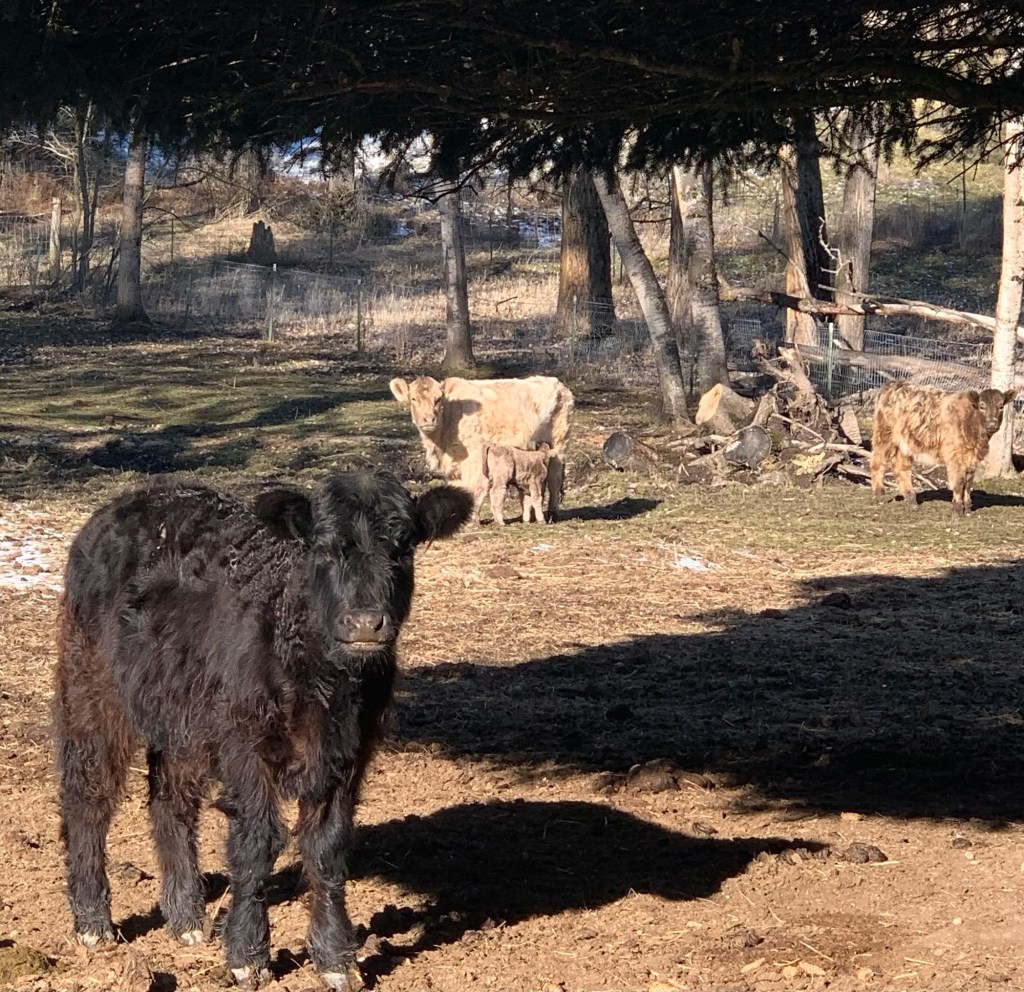
Galloway color genetics are beautifully complex. While silver is a dilution of black, dun is a separate dilution expression. In some lines, calves can begin one shade and mature into another as their neonatal coat sheds and their true adult coat grows in.
The first coat a calf wears is not always the coat they’ll keep.
As he sheds his soft baby hair, warmer tones are beginning to emerge — subtle hints that he may mature into a richer dun rather than the cooler silver he was born with.
Out in the pasture, it’s less about labels and more about watching nature slowly reveal itself.
The Mystery of the Belt
Color isn’t the only thing that can evolve.
In belted Galloway lines, some calves are born with bold, clearly defined belts. Others may appear to have a faint, incomplete, or barely visible band. Occasionally, a calf that looks unbelted at birth may show stronger belt expression as the adult coat comes in and contrast sharpens.
The genetics for the belt are either present or not — but how strongly they express can shift as the coat changes from neonatal to mature.
It’s one more reminder that patience matters in ranching.
Built for the Elements
Part of what makes Galloways so hardy is their double coat:
• A dense insulating undercoat
• A longer, weather-resistant outer layer
That thick coat that protects them through our Eastern Washington winters also plays a role in how color and markings appear. Winter coats can mute contrast. Summer coats can sharpen it.
What you see in January may not be what you see in July.
Why We Love Heritage Breeds
Raising heritage cattle isn’t just about preserving genetics — it’s about preserving curiosity.
We don’t rush the process.
We don’t force outcomes.
We observe.
Watching a silver calf possibly deepen into dun, or waiting to see whether a belt becomes more defined, is part of the rhythm of regenerative ranching.
Nature doesn’t always reveal everything at birth.
Sometimes, it unfolds slowly — one molt at a time.
—
Follow along as we continue documenting life at Anorak Ranch — from heritage cattle and regenerative grazing to the small changes that make ranch life so rewarding.


Leave a Reply